Table of Contents
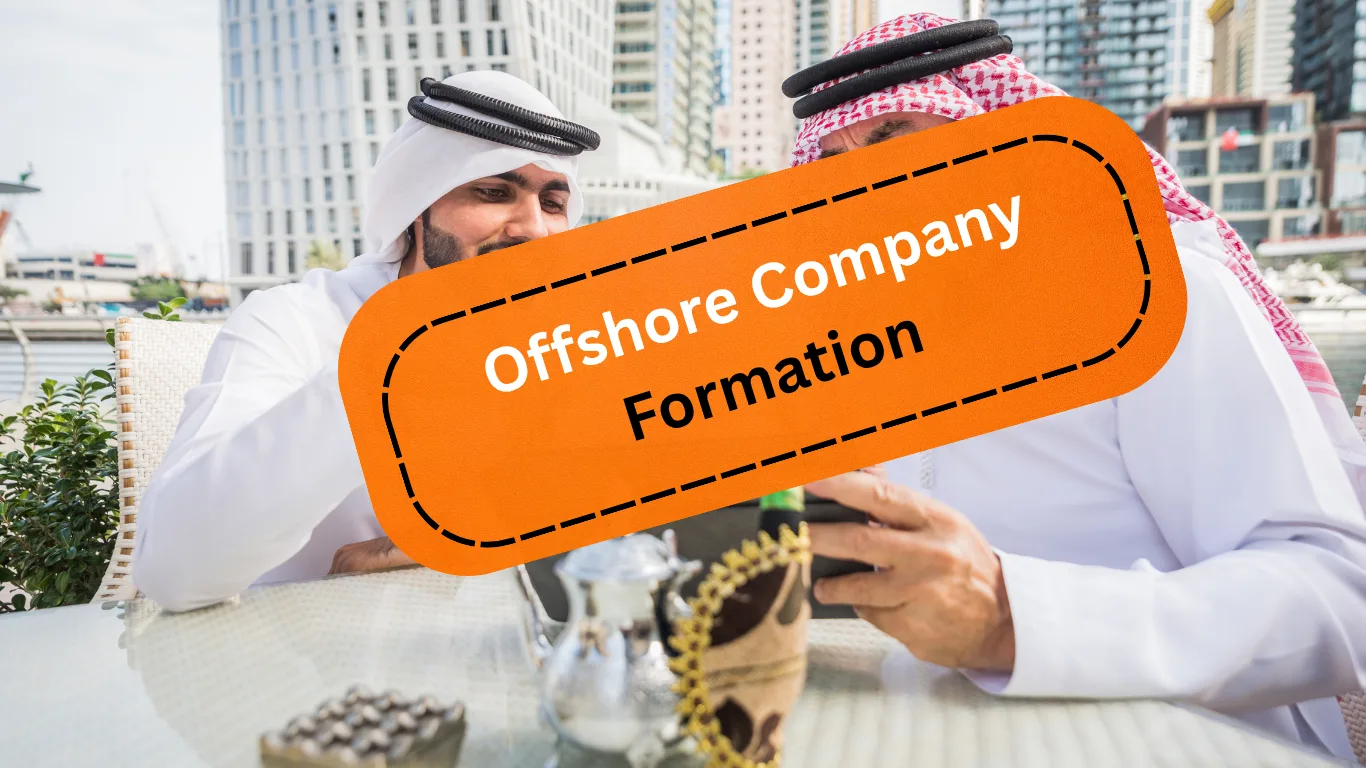
If you are a French entrepreneur or investor looking at ways to protect your wealth and run a leaner, more tax-efficient structure, the UAE probably keeps popping up in your research. And for good reason. Offshore company formation in UAE has become one of the most talked-about routes for French nationals who want asset protection, privacy, and a legitimate way to hold international assets without being tied down by heavy local bureaucracy.
This guide walks through what an offshore company in the UAE actually is, why so many investors from France are setting one up, what it costs, and how the whole process works from start to finish. No jargon, no fluff, just the information you actually need before making a decision.
What Does Offshore Company Formation in the UAE Actually Mean?
Let's clear up a common point of confusion first, because the term "offshore" trips people up more than it should.
An offshore company in Dubai (or anywhere in the UAE) is a legal entity that is registered in the UAE but is not permitted to trade directly within the local UAE market. Think of it as a structure built for international business, not for opening a shop in Dubai Mall. So offshore company in Dubai meaning, in plain terms, is this: a vehicle for holding assets, managing international trade, owning shares in other companies, or protecting wealth, all while being incorporated in a stable, business friendly jurisdiction.
This is very different from a mainland or free zone company, both of which allow you to operate physically and commercially inside the UAE. An offshore entity has no office requirement, no visa quota tied to it in most cases, and it exists mainly on paper, but that paper carries real legal and financial weight.
For French investors specifically, this distinction matters a lot. Many are not looking to relocate or run daily operations in Dubai. They simply want a solid international structure that sits outside the reach of domestic instability, protects family wealth across generations, and works efficiently with global banking.
Why French Investors Are Turning to the UAE?
France has one of the more demanding tax and wealth regimes in Europe, between the impôt sur la fortune immobilière, inheritance rules, and corporate taxation that can eat into returns fairly quickly. It is no surprise that investors are looking elsewhere to structure part of their portfolio.
Here is what keeps drawing French nationals toward offshore company formation in the UAE.
1. Full Foreign Ownership, No Local Partner Needed
Unlike older mainland ownership rules that once required a UAE national partner, offshore companies have always allowed 100 percent foreign ownership. A French investor keeps complete control over the company, its shares, and its decisions, without diluting ownership to satisfy a local sponsorship requirement.
2. Genuine Tax Efficiency
Offshore companies in the UAE are generally not subject to corporate or personal income tax on activities conducted outside the country. Combined with the France-UAE double taxation treaty, this creates real opportunities for structuring international income and investments more efficiently, provided everything is declared correctly under French tax law. It is worth being upfront here: tax efficiency does not mean tax avoidance, and French residents remain bound by their reporting obligations back home. A good structure works with the law, not around it.
3. Asset Protection That Actually Holds Up
Political and economic shifts happen everywhere, including in Europe. An offshore holding structure in the UAE lets you separate personal or family assets from operational business risk. Property, investment portfolios, intellectual property, and shares in other companies can all sit inside a UAE offshore entity, insulated from claims or instability tied to a single jurisdiction.
4. Confidentiality
UAE offshore jurisdictions do not maintain public shareholder registries the way many European countries do. For families who value discretion around wealth and ownership structures, this is a significant draw, particularly for those managing succession planning across borders.
5. Access to International Banking
An offshore company in the UAE can open multi-currency corporate bank accounts, which makes moving funds between France, the UAE, and other jurisdictions considerably smoother. This matters for investors juggling property, business interests, or family assets in more than one country.
Offshore Company Formation in UAE: Requirements
So what does it actually take to set one up? The offshore company formation in UAE requirements are refreshingly straightforward compared to mainland company setup.
Generally, you will need:
- A valid passport copy of each shareholder and director
- Proof of residential address (a recent utility bill or bank statement usually works)
- A bank reference letter in some cases
- A clear description of the proposed business activities
- A registered agent, since offshore companies must be set up through an approved agent rather than directly
There is no requirement for a physical office, no mandatory minimum share capital in most jurisdictions, and shareholders do not need to be physically present in the UAE for incorporation in many cases. Documents typically need to be notarized and, depending on the jurisdiction, attested, which is where a local consultant becomes genuinely useful rather than just a convenience.
Dubai Offshore Company Requirements
When people search for Dubai offshore company requirements, they are often surprised to learn that Dubai itself only has one true offshore option: JAFZA Offshore, registered under the Jebel Ali Free Zone Authority. If you want a broader comparison, the other major player sits just up the coast in Ras Al Khaimah.
RAK ICC Offshore
RAK International Corporate Centre is the most cost effective and fastest offshore jurisdiction in the UAE. It suits holding companies, international trading businesses, and intellectual property structures. Setup times are quick, and the ongoing costs are lower than JAFZA, which is why many first time investors gravitate here.
JAFZA Offshore
JAFZA offshore companies carry a bit more prestige and are closely tied to Dubai's business ecosystem. They are a strong choice for companies involved in logistics, global trade, or those who want the added credibility of a Dubai-based offshore entity, particularly useful when dealing with banks or partners who associate JAFZA with established trade infrastructure.
There is also an offshore company Abu Dhabi option through ADGM, which appeals to investors who want their structure aligned with a jurisdiction known for its financial services regulation, closer in spirit to international financial centers like DIFC.
The right choice really comes down to your goals. If cost efficiency and simplicity matter most, RAK ICC tends to win out. If you are dealing with logistics, trade, or want the Dubai name attached to your paperwork, JAFZA or an ADGM structure may serve you better.
Offshore Company Formation in UAE Cost
Budget is naturally one of the first questions on every investor's mind, so let's talk numbers.
The offshore company formation in UAE cost typically ranges between ≈ €2,430 and ≈ €3,644 for the first year, depending on the jurisdiction chosen and the registered agent's fees. This generally covers government registration charges, agent service fees, and the incorporation certificate.
A few cost factors worth keeping in mind:
- RAK ICC tends to be more affordable than JAFZA
- Bank account opening may involve additional facilitation fees
- Document attestation and translation from French to English or Arabic can add unexpected costs if not planned for upfront
- Annual renewal fees apply and vary by jurisdiction, so it helps to budget for year two and beyond, not just the setup year
If someone promises you a free offshore company formation in UAE, treat that claim with a healthy dose of skepticism. Government fees are non-negotiable and legally required, so what is usually marketed as "free" is really a waived consultancy fee bundled into other services, or a promotional offer tied to additional paid services down the line. Always ask for a full breakdown before signing anything.
Step by Step: How the Process Actually Works
Here is a realistic walkthrough of what happens once you decide to move forward.
Step 1: Document Preparation
You gather passport copies, proof of address, and details on shareholders and directors. If you are based in France, these often need notarization, and in some cases, attestation through the UAE embassy or consulate.
Step 2: Choosing a Registered Agent
Since offshore companies cannot be registered directly with the authority, you will work with a licensed corporate service provider who handles the application on your behalf. This is also the point where you decide between RAK ICC, JAFZA, or another jurisdiction based on your goals.
Step 3: Name Approval
Your proposed company name gets submitted for approval. This usually takes a few business days, and the naming rules are fairly relaxed compared to mainland companies.
Step 4: License and Incorporation Certificate
Once approved, the authority issues your certificate of incorporation, memorandum of association, and share certificates. Depending on the jurisdiction, this step can be completed in as little as three to five working days.
Step 5: Opening a Corporate Bank Account
This is often the part that takes the longest, sometimes several weeks, since UAE banks run thorough due diligence on offshore entities, particularly for compliance with international anti-money laundering standards. Having your documentation clean and complete from the start makes a real difference here.
Who Can Own an Offshore Company in the UAE?
There are no nationality restrictions on offshore company ownership, which means French nationals face no barriers to full ownership. Whether you are an individual investor, part of a family office, or representing a corporate group, the structure remains open to you.
Offshore entities also work well for:
- Family trusts and succession planning
- Holding companies for shares in operating businesses elsewhere
- Special Purpose Vehicles (SPVs) for property or investment holding
- Intellectual property ownership and licensing structures
Offshore Company in Dubai Jobs and Employment Considerations
It is worth addressing something people often search for: offshore company in Dubai jobs. Since offshore companies cannot conduct business inside the UAE and typically do not sponsor employment visas, they are not a route to hiring staff physically based in Dubai or securing a UAE residency visa through employment. If your goal includes relocating to the UAE and working from there, a free zone or mainland company setup would be the appropriate structure instead, and pairing the two (an operational free zone company alongside an offshore holding entity) is a common approach for investors who want both a physical presence and an asset protection layer.
A Quick Look at Notable Offshore Structures in the UAE
While there is not a public, formal "list of offshore companies in Dubai" the way there might be for listed corporations, the offshore landscape here is shaped by three main jurisdictions handling the bulk of registrations: JAFZA Offshore, RAK ICC, and Ajman Offshore. Each authority maintains its own registry, and details on specific companies are generally kept private, which is part of the appeal for investors who value confidentiality in the first place.
(FAQs)
Can an offshore company buy property in the UAE?
Yes, in most cases, though approval depends on the specific emirate's Land Department and whether the property sits in a designated freehold area.
Do I need to visit the UAE to set up an offshore company?
Not necessarily. Many registered agents handle the process remotely, though opening the bank account sometimes benefits from an in-person visit, depending on the bank's policies.
Is an offshore company the same as tax evasion?
No, and this distinction matters. A properly structured and declared offshore company is a legitimate international business tool. French residents remain obligated to report foreign holdings and income under French tax law, and working with both a UAE consultant and a French tax advisor is the responsible way to structure things.
How long does the whole process take?
Incorporation itself can be completed in a matter of days for RAK ICC, slightly longer for JAFZA. Bank account opening is usually the longer pole in the process.
Final Thoughts
Flyingcolour® offers French investors a genuinely useful tool for asset protection, tax efficient structuring, and international flexibility, provided it is set up correctly and declared properly at home. The process itself is relatively simple compared to other jurisdictions, the costs are reasonable, and the confidentiality and banking access make it an attractive complement to a broader wealth strategy.
That said, the details matter. Choosing between RAK ICC and JAFZA, understanding the real cost breakdown, and making sure your structure aligns with French reporting obligations are not things to figure out alone through forum posts and guesswork. Working with an experienced UAE business setup consultant, alongside your French tax advisor, is what separates a smooth, compliant structure from a costly mistake.
If you are considering offshore company formation in the UAE and want guidance tailored to your specific situation as a French investor, reaching out to a licensed corporate service provider is the sensible next step.