

Table of Contents
Start an E-Commerce Business in Dubai in 2026
Dubai has become a hub for entrepreneurs who want to start a business. Dubai offers a logistics network, easy access to markets and a growing number of people who shop online. The UAE gives chances for companies that sell products on websites, social media and popular marketplaces such as Amazon and Noon.
A major advantage of launching an e-commerce business is that a shop is not needed to reach customers. Depending on the business model chosen, a store can be run sales can be made on third party marketplaces or orders can be handled through media platforms.
However, creating a business in Dubai is not about picking a platform and putting products online. One must choose the business activities, obtain a licence and learn the rules that apply to the products to be sold. If the business imports goods, registration with customs and clearance arrangements are also required.
This guide shows how to start an e-commerce business in Dubai. It explains the licensing options that exist, the difference between mainland and free zone company setup, and what is needed to sell on Amazon UAE and Noon.
What Is an E-commerce Business?
An e-commerce business means buying and selling goods or services through platforms. These transactions happen on a company’s website, social media accounts or online marketplaces.
For example, an entrepreneur who brings clothing from India and sells it to UAE customers through a store is running an e-commerce business. Likewise, a company that buys products from suppliers and lists them on Amazon UAE or Noon is also doing trading.
Some common e-commerce business models include:
- Store: Sell products to customers on a dedicated website.
- Marketplace selling: List products on sites like Amazon UAE and Noon.
- Social commerce: Promote and sell products on Instagram and other social media, following licensing and advertising rules.
- Dropshipping: Take customer orders online while a third party supplier keeps inventory and ships.
- Import and online resale: Bring products into the UAE, keep them locally, and sell via platforms.
Choosing a business model is key when forming a company. The business model tells which commercial activities must be included in the licence and whether extra approvals or registrations are needed.

Which Licence Do You Need to Start an E-commerce Business in Dubai?
To run a trading business in Dubai, a commercial licence that covers the planned activities is required.
An e-commerce licence in Dubai is not always permission for every kind of business. The activities listed on the licence must match what the company really wants to do.
For example, a company that sells clothes, electronics or beauty items online might need trading activities plus an e-commerce activity, based on the licensing authority and business model. A company that offers services or sells software may need a set of activities.
The licensing authority also depends on where the company is established:
- Dubai Mainland: Mainland business licences are issued by the Dubai Department of Economy and Tourism (DET).
- Dubai Free Zone: The licence comes from the free zone authority, based on the activities it allows.
Businesses also need to follow the UAE rules that govern trading, such as Federal Decree Law No. 14 of 2023 on Modern Technology Based Trade and other rules about consumer protection, data privacy and product compliance.
Picking the licence from the start is important. If the licence does not match the activities, problems can arise when opening a corporate bank account, registering with customs, obtaining product approvals or finishing seller verification on marketplaces.
Mainland vs Free Zone: Which Is Better for an E-commerce Business?
One of the choices when setting up an e-commerce company in Dubai is whether to register in the mainland or in a zone.
Both places give options for businesses. The best choice depends on where sales occur and how products are. Whether operations include importing, storing or distributing goods inside the UAE.
Mainland E Commerce Licence vs Free Zone E Commerce Licence
|
Issued by Dubai Department of Economy and Tourism (DET) |
Issued by the free zone authority, based on its permitted business activities
|
|
Offers flexibility for trading and distribution subject to licensed activities
|
Offers different packages and office solutions depending on the free zone
|
|
Office requirements depend on the activity and licensing conditions
|
Flexi-desk and shared-office options may be available
|
|
Can be suitable for businesses importing and selling products locally |
Goods entering the mainland are subject to applicable customs and regulatory procedures
|
Which Is the Cheapest Option?
If the cost of forming a company is a worry, a free zone e-commerce licence may be cheaper.
I have seen UAE free zones that offer startup packages. These packages include office arrangements and lower initial set up requirements.
However, the advertised licence price should not be the deciding factor.
Consider a business that plans to import products from China or India and sell them directly to customers across Dubai and the wider UAE.
If the company is registered in a zone, the movement of goods into the mainland must follow the customs and distribution requirements.
Depending on the business model, this may involve a mainland distributor or another suitable mainland arrangement.
A mainland company may therefore be more practical, for entrepreneurs whose primary market's the UAE and who have regular local trading and distribution.
The suitable option depends on the sales market, product category, supply chain and operating requirements.
At Flyingcolour Business Setup, we recommend comparing the company formation and operational costs before the entrepreneur decides on a jurisdiction.
How to Start an E-commerce Business in Dubai: Step-by-Step Process
Once you have decided on your business model, the next step is to create the company and get the licence. The general company setup process includes the following steps.
1. Decide What Products or Services You Want to Sell
Start by deciding what products or services you want to sell. This could be clothing, electronics, home items, beauty products, food items or digital services. This choice is important for licensing because different product types can have trading and legal requirements. If you plan to bring products in from outside it is also helpful to find your suppliers and learn the documents needed to bring those goods into the UAE.
2. Select the Right Business Activities
Once you have settled on your business model, figure out the activities that need to be part of your trade licence. For example, an entrepreneur selling fashion products online may need garment or accessory trading activities plus the right online trading activity. If you want to bring in and sell products, your licence must include those trading activities. It is better to finish these steps before you apply for company formation than to find out later that you need to add activities.
3. Choose Between Mainland and Free Zone Registration
The next step is to pick the area where you want to set up your business. Look at your options by considering your target customers, product types, office needs, visa needs and expected costs. A free zone might be right for a startup looking to get into the market, while a mainland company may be better for a business that focuses on UAE trading and distribution.
4. Complete Company. Get Your Licence
After you pick the area and business activities, you can start the company registration process. Depending on the authority and legal structure, this usually includes:
Selecting and reserving a business name.
- Choosing the structure.
- Getting approval if needed.
- Preparing and sending the incorporation documents.
- Completing the needed registration steps.
- Receiving the trade licence.
For a mainland company setup, you can also apply through the Invest in Dubai portal. Once the licence is given, you can then deal with the immigration, establishment card and visa steps if needed.
5. Set Up Your Online Store and Payment Options
With the company ready, you can now work on setting up the sales part of the business. You may create your e-commerce website. Sign up as a seller on Amazon UAE and Noon. You will also need to set up payment processing, product listings, inventory control, delivery plans and customer help. If you are using your website, make sure the site shows details about pricing, payment rules, delivery, returns and customer policies.
Can You Sell on Amazon and Noon with an E-Commerce Licence?
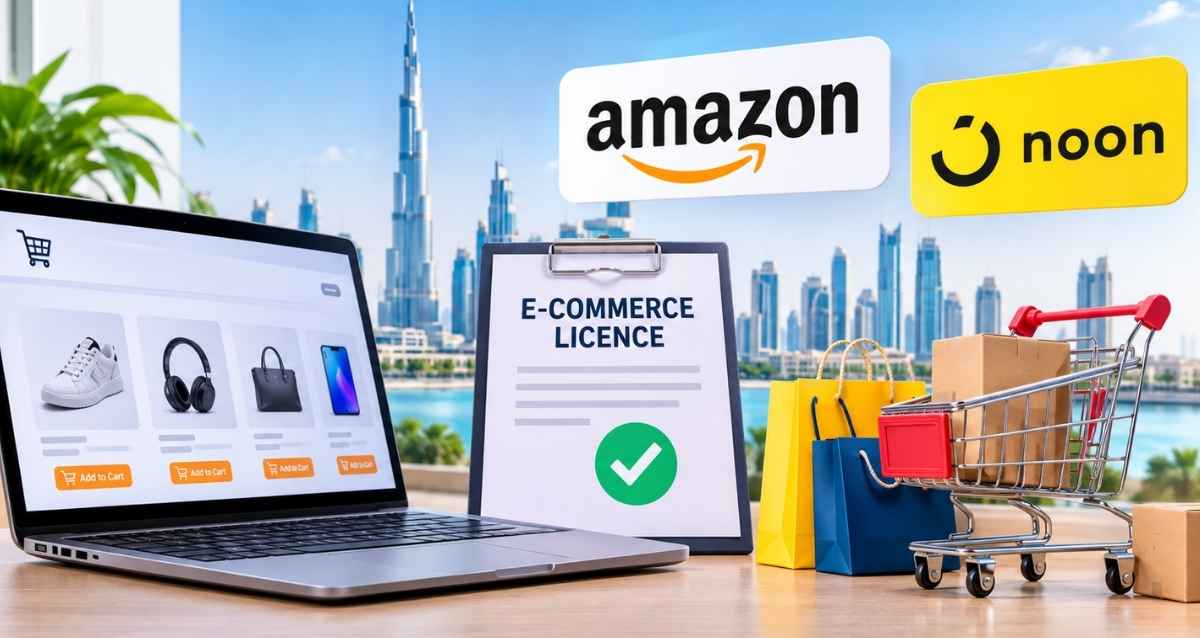
Yes. I see that businesses that have a UAE licence can apply to sell through marketplaces such as Amazon UAE and Noon long as each platforms seller registration and verification requirements are met.
It is not necessary to build a website to start selling. These marketplaces offer a made platform for businesses to list products and reach customers.
Selling on Amazon UAE
Entrepreneurs can register their businesses through Amazon Seller Central. Apply for a business seller account.
Amazon needs a licence for UAE business sellers. Licences that are issued by mainland and free zone authorities can be accepted long as Amazon verifies them.
During registration, you may be asked to provide:
- A UAE trade licence.
- Authorised details.
- Identity documents of the individuals.
- Business contact information.
- Bank account and payment details as requested.
After finishing the verification process, you can upload your product catalogue, manage pricing and process customer orders.
Selling on Noon
Noon is another marketplace through which UAE businesses can sell products online.
To register as a seller, businesses usually need a trade licence that allows the activities. Additional documents such as company registration details, contact information and bank account details may be asked during onboarding.
Both platforms have their seller verification procedures and product-category requirements. Getting an e-commerce licence is a step. It does not automatically mean approval for every product or marketplace listing.
Do E-commerce Products Require Separate Registration in Dubai?
This is something to think about for businesses that are importing products from outside the UAE.
Not all products need registration before they can be sold. The rules that apply depend on the product category, how it will be used, and the regulations set by the UAE authorities.
Some examples are:
- Clothing and fashion accessories: These usually do not need the type of registration that regulated consumer products need. Import, labelling and product standards must still be followed.
- Cosmetics, perfumes and personal care products: These might need product registration through Dubai Municipality’s Montaji system before being sold in the Dubai market.
- Food products and supplements: These might need food product registration, import approvals, health certificates or other related documents.
- Detergents and cleaning products: These are required to be registered and meet safety requirements.
- Electronics and products: These might need product registration and conformity certificates from the Ministry of Industry and Advanced Technology (MOIAT).
For example, Dubai Municipality’s Montaji system covers product categories like cosmetics, perfumes, personal care products, detergents and food contact materials. MOIAT also deals with conformity certification for products that are regulated.
Because of this, businesses should check where their products stand before placing import orders. Knowing the approval needs in advance can help avoid customs delays, extra costs and problems when listing products on marketplaces.
Do You Need an Import Export Code to Import Products into Dubai?
If your e-commerce business involves bringing products in from India, China or another country, you will need to complete the UAE customs registration and clearance steps.
Unlike India, where businesses might be familiar with the Importer Exporter Code (IEC) Dubai uses a Customs Business Code for companies that use customs services.
Businesses that are importing or exporting goods through Dubai Customs usually need to register with the authority and get the Customs Business Code.
The company also needs to have a trade licence that covers the import and export activities.
Dubai Customs registration usually needs documents such as:
- A UAE trade licence.
- Company registration details.
- Identification documents of the person.
- Other supporting documents that are asked for during registration.
The Customs Business Code lets a registered business do customs transactions. So the Customs Business Code is needed for businesses that regularly import stock for sale.
Why Work with Flying Colour for E-commerce Company Formation?
Choosing the business structure is part of starting an e-commerce business in Dubai. The decision made during company formation can affect the ability to import products, get approvals, open a corporate bank account and grow the business later.
An experienced Corporate Service Provider can help with the company formation process. Make sure the planned business activities and licensing structure match the goals.
The support can include:
- Finding out about e-commerce and product trading activities.
- Comparing mainland and free zone company formation options.
- Advising on the licence and registration requirements.
- Understanding import and export processes.
- Helping with customs registration and clearance support.
- Finding out product approval requirements.
We guide entrepreneurs on licensing and compliance requirements because we know how hard it can be. This is especially helpful for first-time entrepreneurs and overseas investors who may not understand how the UAE company formation and regulatory system works. At Flyingcolour Business Setup, we help entrepreneurs and investors with UAE business setup requirements. We guide them from choosing the jurisdiction and activities to completing company registration and understanding the steps that follow after the licence is issued.
Frequently Asked Questions
1. Can I start an e-commerce business in Dubai without a shop?
Yes. An e-commerce business can run without a shop.. You must meet the office, address or flexi-desk rules that apply to your chosen licensing authority.
2. Can I sell on Amazon UAE with a free zone licence?
Yes. Amazon UAE accepts commercial licences from both mainland and free zone authorities. You also need to finish Amazon’s seller verification process and meet its rules for listing products.
3. Is product registration compulsory for every item sold online?
No. Product registration is not required for all items. It depends on the product type. Items like cosmetics, perfumes, detergents, some food products and other regulated goods may need registrations or approvals before they can be sold.
4. Do I need a Customs Business Code to import products into Dubai?
Yes. If your business uses Dubai Customs to import or clear goods, you must register with Dubai Customs. Get a Customs Business Code. Your company must also have the trading activities listed on your licence.
5. Which is cheaper: mainland or free zone e-commerce setup?
Free zone setups can often cost less at the start. A mainland licence might be better if your business focuses on importing and selling products inside the UAE. The total cost depends on your business plan.
6. Can I run an e-commerce business through Instagram or WhatsApp?
Yes. Selling via Instagram or WhatsApp counts as trading. Your business still needs the licence and must follow rules, on online trading, consumer protection and advertising.