

Table of Contents
Get an Alcohol Trading License In The UAE
A large expat population coupled with rising tourist numbers means alcohol is a big business in the UAE. An alcohol trading license in the UAE allows a business to import, store, and sell alcoholic beverages legally, but alcohol trading is legal only through licensed entities under strict rules, and emirate-specific laws can add requirements beyond the federal framework. For entrepreneurs, investors, and businesses, especially UK-based start-ups and SMEs exploring alcohol-related ventures in the UAE, understanding these approval requirements is essential before entering the market.
Before looking at how to obtain this license, let's first understand its legalities for approval: The legal framework governing the license is the ‘Liquor Control Law', but the wider regulatory landscape also includes emirate-level rules, the Penal Code, advertisement laws, taxes and tariffs laws, and alcohol consumption rules that affect how alcohol may be sold, marketed, and supplied in different parts of the UAE.
What Are The Types of Liquor Licenses?
There are 4 types of liquor licenses, and businesses must choose the right license type based on their business activity:
-
Type A: License to import liquor
-
Type B: License to sell liquor to third parties from a shop or warehouse
-
Type C: Serving license to serve liquor within a hotel, club, or restaurant
-
Type D: License to purchase liquor for personal use
Alcohol Trading License in the UAE
Now that we know the different types of alcohol licenses, we can reduce it to either a Personal or a Commercial License. An alcohol trading company generally needs the correct license depending on whether it will import, distribute, or trade alcohol commercially. For a commercial License, it is a trading (import and export) license and also a license to serve, which differs from permits used by individuals to purchase alcohol for personal use. The latter is solely reserved for bars, hotels and restaurants.
For a Type A and B Alcohol license among the seven emirates, it is Fujairah and Ras Al Khaimah (RAK) are the two hassle-free places to obtain an alcohol trading license. While obtaining a license in other emirates is possible, the process can be far more complex and time-consuming.
For personal licenses, non-Muslim residents earning over AED 3,000 typically apply through an application process that requires a filled application form, three months' bank statements, and, for married women, a No Objection Certificate.
To Choose Between Fujairah and RAK
Deciding on either Fujairah or Ras Al Khaimah will depend largely on the budget and the type of alcohol sales you wish to make. In Fujairah, one can set up a liquor trading company as a free zone company and get an import license to sell alcohol through import and re-export. Importers purchase alcohol from global manufacturers for local distribution. This license will not allow you to sell within the UAE. A free zone company can import alcohol and re-export it, but local UAE distribution requires the correct local approvals.
You may opt for a warehouse (leasing starts from AED 50,000*) for storage purposes or simply rent an office (starting from AED 20,000*) and import and re-export liquor products. However, you are not permitted to sell any alcohol on-site. A person of any religion (including Muslims) can register, and the cost is approximately AED 18,000*. In RAK, one can set up a liquor trading company along with an on-site shop. It allows you to sell alcohol in bars, restaurants and hotels – as well as to the general public from your licensed premises. Only non-Muslims can register, and the cost is around AED 4.14 M* including a 4 M* deposit. The objection certificate for trading in alcohol needs to be obtained from the relevant authorities, including the Ras Al Khaimah Tourism and Development Authority.
Application Process and Guidelines
Setup Procedure: As discussed earlier, among all seven Emirates, RAK and Fujairah are the easiest to obtain a license. To obtain this license in RAK, one must first register their business and apply for a general trading license in Dubai, which allows for the import and export of alcohol.
The next step, where applicable, is to obtain initial approval from the relevant authorities before final licensing, and many consultants manage the entire process from initial approval to licensing. The next step is to apply directly to the RAK Tourism Board for your liquor license. In Fujairah, there are no external approvals, as you can directly apply for a Liquor license.
Costing: The most economical entity to get this license is Fujairah. License application here costs AED 110,000*, including an AED 50,000* refundable security deposit. Total setup, including office space and two visas costs will be AED 180,000. RAK, the cost is a little towards the higher end. As the RAK license allows businesses involved in alcohol trade to sell alcohol from the premises, there is a payment of AED 4m to the RAK Tourism Authority for approval – which, along with the general trading license and warehouse lease, puts the total setup costs at around AED 4.14m.
Annual renewal costs vary widely and can range from AED 6,500 to over AED 100,000 depending on the emirate and license structure. For regulatory compliance, businesses involved must also assess VAT and excise obligations and register with the Federal Tax Authority where required.
Benefits of Having an Alcohol Trading License in The UAE
With a valid alcohol trading license, you can run your alcohol trading business without worrying about legal issues while meeting demand from the hospitality sector and licensed retail channels. The UAE alcohol market is expected to surpass USD 10 billion soon. It gives you official approval to import, store, and sell alcohol in line with UAE regulations.
1. Access to Market
The demand for alcohol is high due to foreign visitors, and the hospitality industry also supports licensed retailers, hotels, and restaurants for alcoholic beverages. In Dubai, millions of visitors annually further support alcohol sales through licensed channels.
2. Opportunity for Partnership
You can make a partnership with international alcohol brands, local distributors, hotels, and event planners if you have a legal alcohol license, and wholesale distributors also sell alcohol in bulk to licensed hospitality businesses as part of the supply chain.
3. Flexible Business Options
You can choose to focus only on import and re-export if you have the proper license, as different types of alcohol licenses support different business models. Additionally, you can also sell directly to customers through licensed outlets, including liquor stores.
UAE Alcohol Market
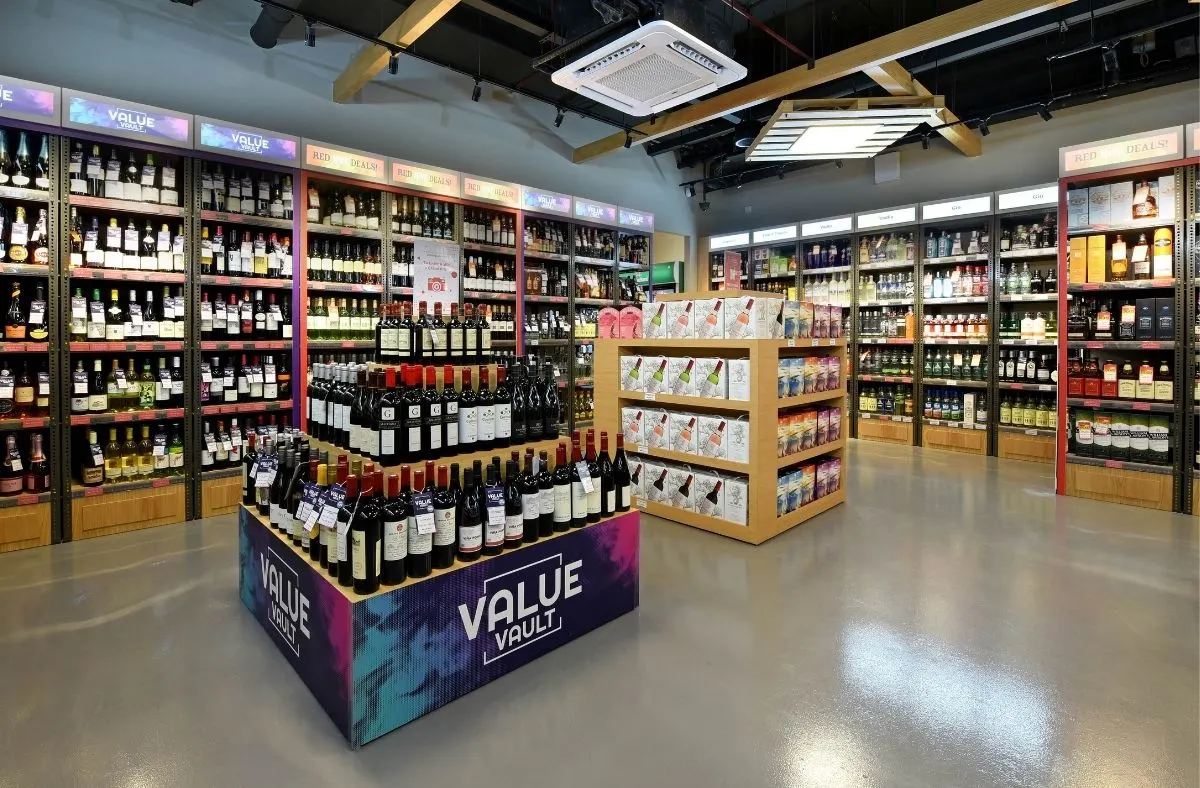
Custom Tariffs: The customs duties for alcoholic products on Cost, Insurance, and Freight (CIF) value vary depending on the port of entry in each Emirate. This is a strictly regulated market operating under strict regulations, and alcohol products are also subject to customs duty and excise-related obligations that vary by emirate. For example, Dubai has a 50% duty. Also, each Emirate adds a sales tax on alcoholic beverages
Sale of Alcohol in Grocery Stores, Supermarkets or Restaurants: No sale of alcoholic beverages is allowed in general spaces such as grocery stores, supermarkets or any other restaurants that are not authorised to sell or serve alcohol. Where licensed sales are permitted, age verification is mandatory, and it is illegal to sell to anyone under the legal drinking age of 21 or allow them to buy alcohol.
Emirate in the UAE that does not permit the sale of Alcohol: Sharjah is the only Emirate where trade and consumption of alcohol are strictly forbidden. The following are the two exceptions in Sharjah: Sharjah Wanderers Sports Club and the duty-free store at Sharjah International Airport.
Local Production of Alcoholic Drinks in the UAE: There is no production of alcoholic drinks in the UAE; hence, all brands are imported, with importers sourcing them from overseas manufacturers for distribution in the UAE, especially the internationally known brands.
Advertising and Promotional Activities: Due to religious sensitivity, public advertising is not permitted.
Media Platforms that are not allowed for Promotional Activities: Any public media platform such as newspapers or mass media is strictly prohibited. Display of product names, brands and pictures of alcohol are also now allowed in the UAE. Window display at the licensed stores is also not permitted.
Types of Alcohol License in UAE At a Glance
|
License Type |
Purpose |
Who Needs It |
Key Notes |
|---|---|---|---|
|
Type A - Import License |
Import alcohol into a specific emirate |
Businesses involved in alcohol import |
Requires customs and regulatory approvals; est. AED 10000*-50000* depending on volume |
|
Type B - Trading License |
Sell or distribute alcohol to third parties |
Retailers, distributors, wholesalers |
Must operate from an approved shop or warehouse; approximately AED 750*-10000* |
|
Type C - Serving License |
Serve alcohol on licensed premises |
Hotels, restaurants, clubs, bars |
Limited to licensed venues only; est. AED 5,000-7,000 |
|
Type D - Personal Use License |
Purchase alcohol for personal consumption |
Individual residents (non-Muslim, 21+) |
No commercial activity allowed; no license fee, only nominal admin/retailer charges |
Documents Required for an Alcohol Trading License in the UAE
Beyond the setup procedure already outlined, applicants should prepare the following documents in advance to avoid delays:
Company Documents
- A valid commercial trade license issued by the Department of Economic Development (DED) or the relevant Free Zone Authority.
- Memorandum of Association (MOA) and Articles of Association (AOA), along with company incorporation documents.
- Passport copies, Emirates ID, and recent passport-size photographs of all partners, shareholders, and the appointed manager.
Premises Documents
- An approved tenancy or Ejari contract for the office, shop, or warehouse.
- A basic floor plan showing storage and operational areas.
- Documentation proving compliance with fire safety and security standards for alcohol storage.
Business and Financial Documents
- A business plan outlining trading activities, storage methods, and target customers.
- Bank statements from the last three months as proof of financial stability.
- In some cases, a document estimating the monthly volume/cost of liquor required for the business.
Regulatory Approvals
- Formal approval from local police authorities, where required (particularly relevant for RAK and Dubai).
- A No Objection Certificate (NOC) from the landlord permitting alcohol trading activity on the premises.
- Additional documentation confirming the premises meet zoning and safety regulations.
Mistakes to Avoid When Obtaining an Alcohol Trading License in the UAE
1. Selection of an Unsuitable Emirate
Every emirate has different regulations, and choosing the right one also depends on your planned business activity and the required license type. Fujairah is ideal for importation and re-exportation, but you cannot sell directly to customers on-site (as that differs from the tourism requirements). RAK, you can sell on-site, but it is more expensive and has more rules. Choose wisely based on your business plan.
2. Lack of Necessary Approvals
Some licenses require approvals to be obtained from other local authorities, particularly in RAK, the RAK Tourism and Development Authority, and from police authorities where required; for premises that serve alcohol in Dubai, dubai police may also be involved. Ignore these, and you will receive a letter of rejection.
3. Not Considering All Costs
Consider more than just the license cost. You must also pay for deposits, warehouse storage rent, visas, renewals, etc. Forgetting about these can lead to more money issues later down the line.
4. Ignoring Regulations
Selling alcohol if the customer did not produce ID, moving it with no permit, and storing it incorrectly are all examples of breaches that can lead to large fines or losing your license, as alcohol trading activities are monitored through storage, transport, and sales rules. Alcohol licenses must be renewed annually and may be subject to compliance checks.
Frequently Asked Questions (FAQs) About Guide To Get Alcohol Trading License In The UAE
1. Who can apply for an alcohol trading license in the UAE?
If you are in Fujairah, then both Muslims and Non-Muslims can apply for a license. In Ras Al Khaimah, only non-Muslims can apply for the license. The applicants must be 22 years old.
2. For what time is the alcohol trading license valid?
Most of the alcohol trading licenses in the UAE are valid for one year. You have to renew it before the expiry of the license to avoid business disruption.
3. Can I sell alcohol in any country in the UAE with my license?
No. You can only sell in areas allowed by your license. RAK licenses permit only on-site sales, but Fujairah, for example, is mainly for import and re-export only.
4. Can I produce alcohol in the UAE?
No. There is no production of alcohol in the UAE. All alcoholic drinks are imported from overseas.
5. Can I promote alcoholic drinks in the UAE?
There are religious and cultural views towards the sale of alcohol in the UAE, and, therefore, no alcohol advertising is permitted in any form in newspapers, on billboards, or social media.
6. What documents are required to apply for an alcohol trading license in the UAE?
Major documents include a valid trade license, MOA and company establishment papers, along with passport copies of shareholders and the appointed manager and an NOC from the landlord allowing alcohol trading on the premises.
7. How long does it take to get an alcohol trading license approved in the UAE?
A commercial alcohol trading license typically takes around 2 to 3 weeks to process once all documents and regulatory approvals are submitted. A personal consumption license (Type D) is usually issued much faster, often within 24 to 48 hours.
8. Can a free zone company sell alcohol within the UAE mainland?
A free zone company can import and re-export alcohol internationally, but to distribute or sell within the UAE mainland it generally needs to establish a mainland branch with DED approval, since a free zone license alone does not cover local mainland distribution.
9. How much does it cost to renew an alcohol trading license?
Renewal is required annually, and costs vary significantly by emirate and license type, typically ranging from around AED 6500* to over AED 100000*, with large-scale import or retail operations sometimes requiring additional security deposits.
10. Who issues alcohol licenses in Dubai and Abu Dhabi?
In Dubai, the Dubai Tourism and Commerce Marketing (DTCM) issues licenses for hotels and restaurants, while the Dubai Police General Department issues licenses for clubs, pubs, and bars. In Abu Dhabi, licensing for hospitality venues runs through the emirate's Tourism and Economic Development authorities.
For more information on getting an alcohol trading license in the UAE, Book a free consultation with one of the Flyingcolour Business Setup team advisors.
Please note: This article was published on 3rd August 2026. The information provided in the article is based on the policies and rules applicable at the time of writing it. Talk to one of our consultants for any recent updates or changes.