Table of Contents
How to Get a Trade License in Sharjah? A Complete Business Setup Guide
Starting a business in Sharjah is an increasingly appealing option for entrepreneurs, investors & business owners looking to establish a foothold in the UAE. With its prime location, business-friendly ecosystem, industrial infrastructure & a gateway to regional markets, Sharjah opens up a host of possibilities across trading, consultancy, manufacturing, e-commerce & professional services.
To actually go about running a business in Sharjah, you do need to get your trade licence in Sharjah sorted out with the relevant authorities. Depending on your business idea and the type of operation you have in mind, you can decide between a Sharjah mainland trade licence issued through the Sharjah Economic Development Department (SEDD) or a licence from the Sharjah free zone authorities.
If you're scratching your head over how to get a trade licence in Sharjah, what paperwork you're going to need, how much it will cost you or which type of jurisdiction will suit your business best, then this guide has got you covered - it runs through the process step by step.
What Is a Trade License in Sharjah?
A trade license here is basically an official permit that lets you run your approved business - or your company does - within the Sharjah jurisdiction. The licensing authority takes a close look at what business you want to do, the actual company setup you've got, where you'll be operating from, and any relevant approvals you'll need.
In Sharjah, the SEDD folks handle mainland economic licenses, while free zone licenses get issued by the specific free zone authority itself.
The license basically outlines what your company is allowed to do. For example, if you've got a company that trades, you can't just automatically go out there and offer consultancy or industrial services or whatever unless those specific services are actually covered in your approved activities.
Why is a Trade License so Important?
- Legally, it gives the green light for your business to start operating as it should.
- It sets up your company with a registered business identity that counts.
- Helps you get corporate banking and other business services, provided the bank will have you.
- Makes it easier to apply for employee and investor residence visas, depends on who you are and what you're doing.
- Helps keep you on the right side of the regulations and supports business expansion plans.
The UAE government recognises a bunch of different license types, including commercial, industrial and professional ones. Which one you need will depend on your actual business.
What Are the Different Types of Trade Licenses in Sharjah?
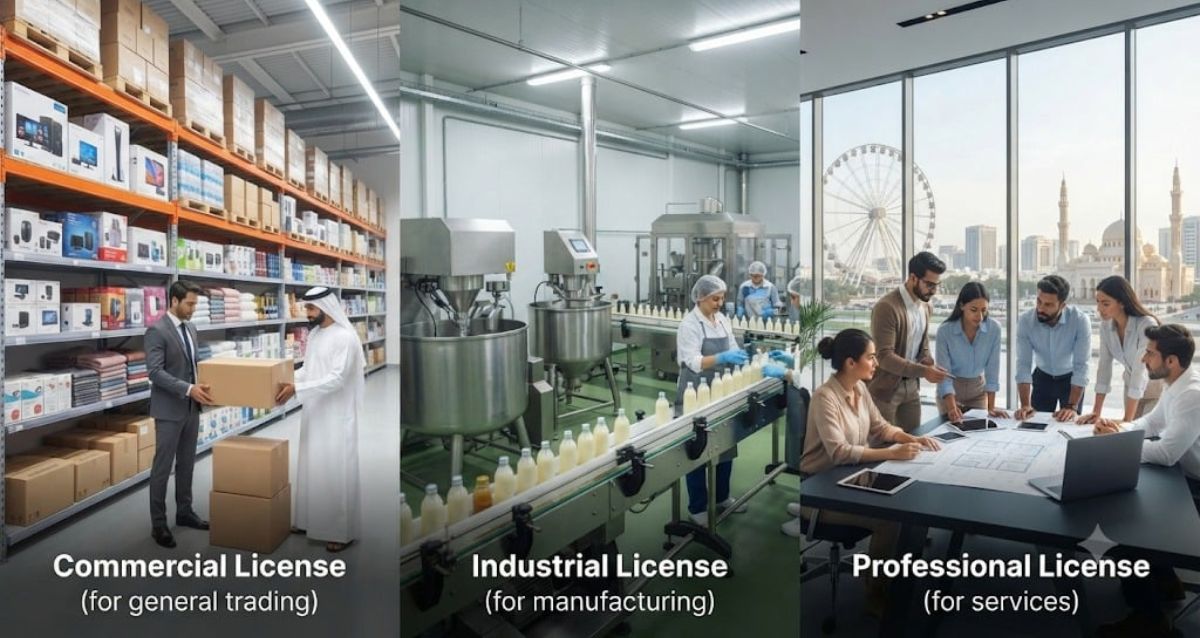
Before you start the application process, take a moment to figure out which of your business activities fits into one of these four licence categories. If you pick the wrong one, it's going to set you back with unnecessary changes , delayed applications and extra costs.
1. Commercial Trade Licence
Most businesses that buy and sell goods fall into the commercial trade category. This includes all the usual suspects like
- General trading companies.
- Electronics and mobile phone shops.
- Businesses that specialise in building materials.
- Clothing and textile sellers.
- Auto parts suppliers.
- Anyone selling foodstuff.
2. Professional Trade Licence
If you're running a business that relies on your expertise, then this is probably the category for you. This could be anything from
- Management or marketing consultancies.
- IT services.
- Accountants and bookkeepers.
- Designers and creatives.
- Business consultants.
Some of these professions will need extra qualifications or permits on top of the licence.
3. Industrial Trade Licence
If you're planning on manufacturing or producing goods, then this is the licence you need. Think of it like - if you're making food or turning wood into furniture.
- Food manufacturers.
- People who pack and process goods.
- Furniture makers.
- Metal fabricators.
- Industrial production (whatever that might be).
Just keep in mind that some of these businesses need special permits to cover things like where they operate and how they keep the environment and staff safe.
4. E-Commerce Business Licence
If you're planning on selling products or services on the web, then this is the licence you need to get. This will cover online retail, digital sales and other approved types of e-commerce. But be warned - the licence itself doesn't automatically mean you can do whatever type of online business you want. You need to check that the licence actually covers the products and services you want to sell.
The takeaway: An e-commerce licence isn't a free pass to sell anything and everything online. Check that your chosen licence covers what you plan to sell.
How to Get a Trade License in Sharjah? Step-by-Step Process
The process of getting a Sharjah trade license is a bit of a puzzle, and it starts by figuring out your business activity, picking a legal structure, setting a unique trade name, getting the necessary approvals, and submitting it all to the right people in authority.
For mainland businesses, the Sharjah Economic Development Department (SEDD) is the one in charge of sorting out the economic licensing. Here's what you need to do:
Step 1: Pick Your Business Activity
You need to decide what kind of products or services your company will be selling, and your chosen activity will determine everything from the license category to which government approvals you need to get. Let's say, for example, you want to start selling electronics - you'll need a commercial activity license, but if you're offering management consultancy services, you'll need the relevant professional activity license instead.
Before you move on to the next step, make sure to check:
- whether SEDD actually lets you do what you want to do
- whether you can bundle multiple activities together under one license
- whether your activity needs any special external approvals
- if your preferred legal structure is actually compatible with your chosen activities
Step 2: Choose a Legal Structure
This is where you figure out how your business is going to be run - who's going to own it, who's going to be in charge, and what rules you'll have to follow.
Some common business structures are:
- Limited Liability Company (LLC)
- Sole Establishment
- Civil Company
- Branch of a UAE or foreign company
What structure you choose is all going to depend on how many shareholders you have, where they're from, what kind of business you're running, and what kind of ownership arrangements you want.
And, yes, foreign investors can actually own 100% of some UAE mainland businesses, provided it's not for certain activities that are restricted.
Step 3: Pick a Trade Name
You need to pick a business name that's unique and complies with UAE naming regulations. The name should reflect who you are as a business and can't be the same as any other registered names or violate regulatory standards.
The trade name needs to be:
- available for registration
- not off-colour or offensive in any way
- not misusing government or religious names
- match your company's legal form and business activity
- follow the rules for using foreign languages
You can actually apply for trade name registration through SEDD's official channels.
Step 4: Get Your Initial Approval and External Approvals in Order
Once you've got this far, you'll get initial approval to carry on with the business set-up process - but don't get too excited; it doesn't actually let you start trading.
Depending on the activity you've chosen, you might need some extra approvals from other government departments or regulatory bodies - like, for example, if you're in the healthcare, education or food industries. Try to get these sorted out early on so you can avoid delays later on.
Step 5: Get Your Business Location Sorted
Most mainland businesses need to meet some basic premises requirements. This might mean arranging:
- a commercial office
- a retail shop
- a warehouse
- an industrial facility
- or some other business premises that's been approved
As part of this process, you might need to sort out your tenancy contract, technical evaluation and other premises requirements before you can get your licence.
Step 6: Put All Your Documents Together and Submit Them
Once you've finalised your business activity, legal structure, trade name and premises, you'll need to put all the relevant documents together.
Submit it all through SEDD's official website or one of their branches. Double-check your shareholder details, company information and supporting documents so you don't have to go back and fix any mistakes later on.
Step 7: Pay the Fees and Get Your License
Once your application is reviewed and approved, you'll receive a payment voucher, and then you can pay the required government and third-party charges to complete the licensing process.
According to SEDD's published license issuance service, processing should take one working day once you've got all the necessary approvals and documentation in order. Not a given, though - external approvals, premises arrangements and getting all the paperwork right can take a bit longer.
Once issued, check the license details carefully, particularly the company name, legal structure and approved business activities.
What Are the Sharjah Trade License Requirements?
The Sharjah trade license requirements depend on the type of company, selected activity, shareholder details and jurisdiction. However, applicants generally need to prepare the following documents and information.
|
Document or requirement |
Purpose |
|---|---|
|
Passport copies |
Shareholder and manager identification |
|
Emirates ID copies |
Identification, where applicable |
|
Trade name certificate |
Confirmation of the registered business name |
|
Initial approval |
Permission to proceed with establishment |
|
Application form |
Business and shareholder details |
|
Memorandum of Association (MOA) |
Company ownership and management arrangements, where applicable |
|
Tenancy contract or title deed |
Evidence of approved business premises, where applicable |
|
External approvals |
Regulatory clearance for specific activities |
|
Legal agreements |
Documents required for the selected legal structure |
Additional documents may apply to foreign companies establishing branches, corporate shareholders and regulated business activities.
- For UAE citizens: Identification and ownership documents may be required, depending on the legal structure.
- For expatriate entrepreneurs: Passport, residency and other supporting documents may be required depending on the application and activity.
- For corporate shareholders: Parent-company documents, board resolutions and properly attested legal documents may be necessary.
The final checklist should always be confirmed with SEDD or the relevant free zone authority before submission.
How Much Does a Trade License in Sharjah Cost?
The Sharjah trade license cost depends on several factors, including the business activity, legal structure, premises, ownership and additional approvals. There is no single fixed price applicable to every business.
For Sharjah mainland licenses, SEDD publishes a fee calculation based on the lease contract value or area, alongside additional charges. Its currently published license issuance schedule states:
|
Fee component |
Published amount |
|---|---|
|
License fee for UAE citizens |
8% of lease value or area, minimum AED 800 |
|
License fee for other nationalities |
13% of lease value or area, minimum AED 1,300 |
|
Trade name signboard permit |
AED 200* |
|
Commercial register certificate for sole proprietorship |
AED 500* |
|
Commercial register certificate for industrial license |
AED 1,200* |
|
Printing |
AED 300* |
|
E-services |
AED 100* |
|
Representative card |
AED 300* |
|
Technical evaluation |
AED 150* |
These are published fee components, not a complete quotation for every business. Legal documentation, Sharjah Chamber of Commerce and Industry charges, SEWA-related payments, premises expenses and activity-specific approvals may increase the total cost.
Also, certain legal forms have separate contract certification fees.
What Factors Affect the Sharjah Trade License Cost?
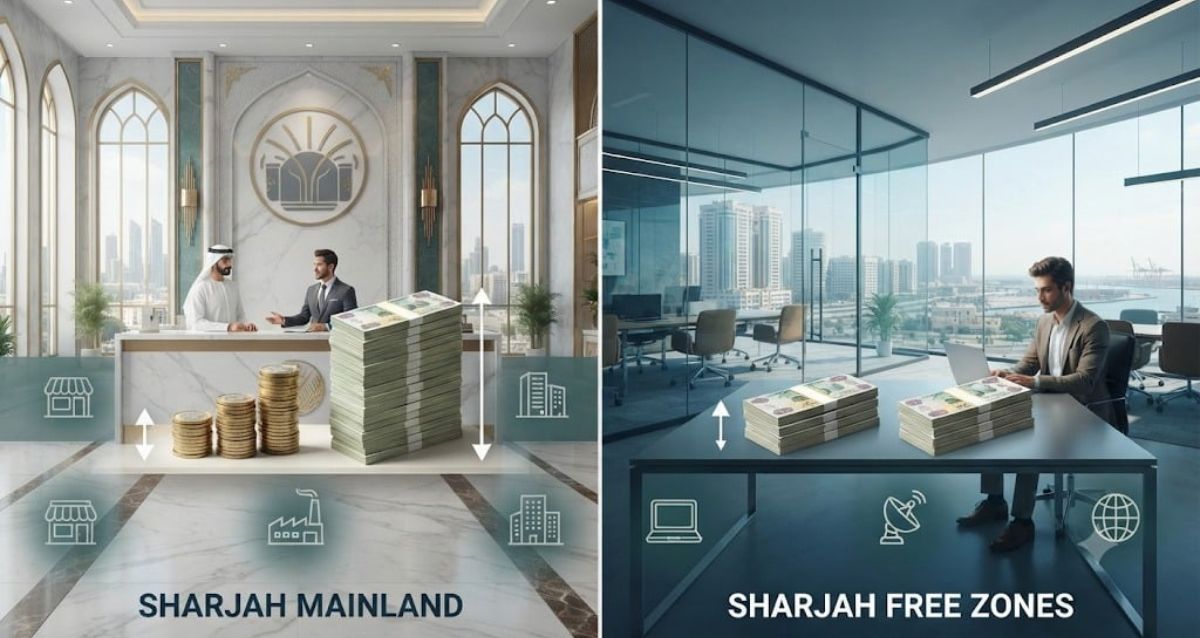
When putting together your business setup budget dont forget to consider these key cost factors:
- Business activity: if your business is a speciality or has regulatory needs, you can bet you'll be looking at some extra fees for approvals and the like
- Legal structure - are you an LLC, just a small shop or a branch operation? Each will likely have its own set of documentation & registration costs
- Rent on office or warehouse space: this can have a knock-on effect on your overall setup costs, possibly even influencing your licence fees in the process
- Where you're from - shareholder nationality: try as you might, UAE citizens will probably get a different deal on licensing fees compared to others
- Additional approvals: some activities come with third-party regulatory costs you should factor in
- Visa requirements: and don't forget about the visa fees for yourself or any employees
- Which free zone you go with: every free zone is different and its packages are too - think facilities, licence activities and visa allocations
Our take on this: get a fully itemised quote before you start the application process. Those package deals that sound so cheap may not include all the government charges , office overheads and immigration costs you should be expecting
What Is the Difference Between a Sharjah Mainland Trade License and a Sharjah Free Zone Trade License?
Entrepreneurs in Sharjah have a couple of choices to make when it comes to acquiring a trade license - a mainland trade license or a free zone trade license. Which one is right for you will mostly depend on where you plan to set up shop, who your customers are and what your business needs in terms of facilities and services.
Sharjah Mainland License - The UAE Domestic Market
If you're thinking of operating on the UAE mainland, then a mainland license from SEDD will be suitable for you - subject to the activities you want to do and the regulations that apply.
The plus side of a mainland license is that you get to:
- tap into the UAE mainland market
- serve local customers and businesses - assuming you've got the right activities and approvals
- set up shop in a location that suits you
- partner with government and private organisations, provided you meet their bid and procurement requirements
- expand your business by adding more approved activities and locations
Sharjah Free Zone License - Business in a Special Area
If you're looking for a Sharjah free zone trade license, it's issued by the free zone authority. Each free zone offers its own package of business facilities and perks for entrepreneurs, international investors and businesses that need customised services.
Some free zones are more suited to certain types of businesses than others. Here are a few examples:
- SAIF Zone - Where Logistics Come First
SAIF Zone might be what you're looking for if you're into logistics, trading, storing goods, or running an industrial operation near Sharjah International Airport. - Hamriyah Free Zone - Where Manufacturing and Trading Come Together
Hamriyah Free Zone is geared towards businesses that do manufacturing, industry, trading and logistics - or some combination of those. - Sharjah Publishing City Free Zone - Where Media and Publishing Come Alive
If you're in publishing, media, consultancy or other approved activities, then Sharjah Publishing City Free Zone might be the place for you.
But here's the thing about free zones - business conditions, office arrangements, visa options and what activities are permitted all vary from one free zone to the next.
One important thing to keep in mind is mainland access. With a free zone license, you don't automatically get to do business on the UAE mainland - you may need an approved distributor, a mainland branch, a permit or some other arrangement to operate there.
|
Comparison |
Mainland |
Free Zone |
|---|---|---|
|
Licensing authority |
SEDD |
Relevant free zone authority |
|
Main market |
UAE domestic market and international markets |
Free zone and international markets, subject to applicable rules |
|
Office options |
Approved mainland premises |
Facilities offered by the zone |
|
Business activities |
SEDD-approved activities |
Activities permitted by the selected zone |
|
Setup costs |
Depend on activity, premises and legal structure |
Depend on package and facility requirements |
|
Mainland access |
Direct operation within approved scope |
Subject to applicable mainland permissions or arrangements |
Which option should you choose?
Choose mainland if your business needs to serve customers directly across the UAE, establish local retail or commercial premises, or pursue mainland contracts. Consider a free zone if you prioritise a specialised business environment, international trading, warehousing or a package that matches your operational requirements.
Can Dubai Residents Get a Trade License in Sharjah?
Dubai residents can get a trade license in Sharjah if they meet the standard requirements, which cover things like licensing, ownership, documentation & exactly which business activities they're planning to get into.
You don't have to actually live in Sharjah to get a business up and running there - but your business will need to be set up according to the rules set by the licensing authority you end up going with.
Dubai-based business folks should keep in mind:
- What kind of business you want to start - is it even allowed in Sharjah?
- Do you want to operate out of the mainland or a free zone?
- Make sure you've got a valid passport and other ID sorted.
- Get the office space sorted out if you need it.
- Check you don't need any external approvals.
- Before you apply for a visa, take a look at whether you can keep your existing work contract, residency & sponsorship arrangements or if they need tweaking.
Can someone with a Dubai residence visa own a Sharjah company?
It's separate from your UAE residence visa, who the business belongs to and all that. You can definitely still buy into a company in Sharjah, even with a Dubai residence visa. But you should think about your employment contract, sponsor requirements and immigration stuff before making any changes.
So - Dubai residents should get some proper advice before trying to change their visa or work situation.
What Is the Difference Between a Sharjah Trade License and a Dubai Trade License?
Both Sharjah and Dubai offer mainland and free zone business setup options. However, the licensing authorities, fees, business facilities and administrative procedures differ. A Sharjah mainland license is issued by SEDD, while a Dubai mainland license is issued by the Dubai Department of Economy and Tourism (DET).
Consider the following comparison:
|
Factor |
Sharjah |
Dubai |
|---|---|---|
|
Mainland authority |
SEDD |
Dubai DET |
|
Free zone options |
SAIF Zone, Hamriyah, SPC and others |
DMCC, IFZA, JAFZA and others |
|
Business environment |
Industrial, trading, logistics and professional sectors |
Trading, finance, technology, tourism and professional sectors |
|
Licensing fees |
Based on Sharjah's applicable fee schedule |
Based on Dubai's applicable fee schedule |
|
Office options |
Depends on jurisdiction and activity |
Depends on jurisdiction and activity |
|
Market access |
Subject to license and applicable UAE regulations |
Subject to license and applicable UAE regulations |
Which Emirate Makes Sense for Business Setup?
The real question is what kind of business you have - not which emirate is the most popular.
Sharjah might be your best bet if:
- You are planning to set up operations in Sharjah's actual business hubs.
- You need space for storing or making things - you know, warehousing or manufacturing.
- You think Sharjah's mainland or free zone licensing might be a good fit for you.
- Most of your business - whether that's customers, suppliers or operational bases - is already in Sharjah.
Dubai, on the other hand, is probably the best option if:
- You want to be in the thick of it in one of Dubai's commercial areas.
- You're trying to tap into a specific bit of Dubai's business scene.
- Lots of your customers or business partners are in Dubai.
- A Dubai free zone happens to have exactly what you need to run your business.
The bottom line is you need to compare all the money it takes to set up and run a business in each emirate - not just the initial licence fee.
How Does Sharjah Trade License Renewal Work?
Sharjah trade license renewal is essential to ensuring your company stays in good standing and compliant with the law. Businesses should keep a close eye on their license expiry dates and get the renewal process wrapped up within the given timeframe.
SEDD has a convenient online license renewal service up and running on their official website and other approved service channels.
Renewing Your Sharjah Trade License - Step by Step
- Make sure you have your current trade licence in hand and can see when it's due to expire.
- Double-check the company's approved business activities to make sure everything is still good to go.
- Get a valid tenancy contract lined up if you're not already sitting in an office, etc.
- Get the relevant authorities to rubber-stamp any updated approvals that are necessary.
- Head on over to the SEDD platform using UAE Pass and log in.
- Pick the license renewal service from the menu.
- Upload all the necessary documents.
- Review your application and pay the required payment voucher.
- Once your application has been processed, you'll get your renewed trade licence in the post.
What Can Happen If You Let Your License Run Out?
Letting a business license expire can really cause some issues in terms of compliance and operational problems.
SEDD warns that failing to get your renewal in on time will set you back a whopping AED 200 per month - there may also be other requirements depending on what your business does and what's going on.
Tip: Don't put things off until the last minute - get checking your tenancy, regulatory approvals and company documents with plenty of time to spare before the expiry date.
Common Mistakes to Avoid When Setting Up a Trade Licence in Sharjah
Setting up a licence is much less hassle when you plan it properly - problem is, some entrepreneurs still end up forgetting to tick off some very important requirements that end up costing them time or money.
Here are the top 7 things to avoid when getting a trade licence:
- Choosing a business activity that's not quite right for you: Your approved activities need to match up with what you're actually selling or doing.
- Overlooking the need for additional approvals: Regulated industries may need you to get special government clearances.
- Picking the wrong jurisdiction: If you need to be able to sell to the mainland market, then a free zone may not be the best choice for you.
- Underestimating how much you'll need to spend to set up: Don't forget registration fees, premises costs, government charges, visas and renewal costs.
- Using a trade name that's not available or not allowed: Check out name availability and the trade naming regulations before proceeding.
- Not checking if your premises meet the requirements: Your office, shop or warehouse will need to meet the requirements of the relevant licensing conditions.
- Missing your renewal deadline: Keep an eye out for expiry dates and keep all your supporting documents up to date.
Setting up a well-planned business is the key to avoiding all sorts of unnecessary headaches, delays and unexpected costs.
How Can Flyingcolour® Business Setup Help UAE Entrepreneurs Get a Trade License in Sharjah?
Starting a company in the UAE requires a lot more than just getting a trade licence. As an entrepreneur, you've got to make some pretty big decisions on the jurisdiction, what kind of business activity you're going to be doing, who its going to belong to, how to document everything, what bank you're going to use, and all the ongoing compliance that comes with it.
Flyingcolour Business Setup is here to help entrepreneurs, investors and business owners get through the business establishment and related professional services needed to set up a business in the UAE.
Our approach is about helping our clients really understand what their options are, and picking a business structure that actually helps them get what they want from their business.
What We Can Do to Help with Your Business Setup:
- Mainland and Free Zone Company Formation
We can help you look into your options for setting up a business in Sharjah, whether it's on the mainland or in a free zone, depending on what kind of business you want to run, how much money you have to spend and what kind of operations you need to be able to do.
- Trade License Application Assistance
If you need help getting a license, our team is here to assist, from getting all the documentation together to picking the right business activity right through to filling out the application and following up with the authorities.
- Business Activity and Jurisdiction Guidance
Picking the right business activity to start with is a big decision. We can help you work out what kind of license you'll need, and what the difference is between setting up on the mainland versus in a free zone.
- Documentation and Government Approvals
We can help you get all the right documents together to make sure your business gets registered as smoothly as possible.
- PRO and Visa Assistance
You may need some help with visas for your investors, partners or employees. We can help sort out the relevant immigration and PRO requirements, subject to you meeting the eligibility criteria and getting the right approval from the government.
- Corporate Banking Assistance
Once your business is up and running, you're going to need to get a corporate bank account. We can help you figure out what documentation you'll need and go through the application process with you, all subject to the bank doing their due diligence and giving us the go-ahead.
- Accounting, VAT and Corporate Tax Services
Just because you've got your licence doesn't mean the hard work is over. We can also help you with accounting, bookkeeping, VAT, corporate tax and audits, so you can manage all the ongoing stuff that goes with running a business.
Why Choose Flyingcolour Business Setup?
When you're trying to set up a business in the UAE, you must get the right advice from the start. That's what we do best at Flyingcolour Business Setup. We focus on:
- Understanding what you want to get out of your business before we recommend a setup option.
- Explaining the differences between mainland and free zone licensing in a way that makes sense.
- Helping you get the documentation and registration sorted.
- Breaking down the costs of setting up a business and helping you plan your budget.
- Providing you with access to all the extra services you'll need, like accounting, tax and advice.
- Being there to support you after the initial set-up is done and you're up and running.
Whether you're a UAE national, an expat, a Dubai resident or an international investor, we're here to help you figure out the best way to set up your business in Sharjah or across the UAE.
Planning to start a business in Sharjah?
Get in touch with Flyingcolour Business Setup to talk through what you want to do, get some guidance on your options, figure out what it might cost and what you need to do to set up your business.
Frequently Asked Questions About Getting a Trade License in Sharjah
1. How can I get a trade license in Sharjah?
You can get a trade license in Sharjah by first figuring out which business activities you want to be licensed for, deciding on a business structure, coming up with a trade name, getting the necessary approvals from government and other bodies, sorting out where you'll operate from, and then sending off your application to either the SEDD or the relevant free zone authority. Once you've got approval and paid the fees, the license gets issued.
2. How Much is a Trade License in Sharjah Going to Cost Me?
The cost of a trade license in Sharjah will depend on a bunch of different factors, including the business activity itself, the type of business structure you're going for, where you're going to operate from, who owns the business and which authority you're getting the license from. SEDD publishes some mainland license fees which include things like 8% of the lease value for UAE citizens (with a minimum of AED 800) or 13% for everyone else (with a minimum of AED 1,300). But watch out for other government and third-party charges that might come up later on.
3. Can Foreigners Get a Trade License in Sharjah?
Foreigners can get a trade license in Sharjah. They can establish a business through either the mainland or a free zone, but they'll need to meet the requirements for the business activities, the type of business structure and any regulatory stuff that applies. Luckily, many business activities do allow for 100% foreign ownership.
4. Can Dubai Residents Apply for a Sharjah Trade License?
Yes, they can. If a Dubai resident meets the relevant requirements and can provide all the necessary documentation, they're free to apply for a Sharjah trade license. They should probably also check out their current employment and visa arrangements before applying for any visas that might be needed as an investor or partner, though.
5. What Papers Do I Need to Get a Sharjah Trade License?
You'll probably need to provide a copy of your passport, a copy of your Emirates ID (if applicable), trade name approval, initial approval from the relevant authorities, a completed application and any necessary tenancy documents or legal agreements. Depending on the type of business you're setting up, there may be additional government approvals you'll need to sort out.
6. What's the Difference Between a Sharjah Mainland and Free Zone Trade License?
A mainland license is issued by SEDD and lets businesses operate within the UAE. A free zone license, on the other hand, is issued by a specific free zone authority and is best suited for businesses that want to operate within the zone and do business internationally. It's worth noting, though, that businesses in the free zones will still need permission to operate directly on the mainland.
7. How Do I Renew My Sharjah Trade License?
You can renew your license through SEDD's website, app or one of their approved service centres. Just submit the renewal application, provide the necessary tenancy documents and any external approvals that might be needed, and pay the renewal fees. Be warned: there's a pretty hefty late renewal fine of AED 200 per month if you don't get it sorted by the specified deadline.
Final Thoughts
Getting a trade license in Sharjah is a big part of setting up a business in the UAE. But having the right license, choosing the right business activity and getting the right jurisdiction is just as important as getting all the registration bits out of the way.
Whether you're setting up a trading company, a consultancy, a manufacturing operation or an e-commerce business, take the time to figure out what licenses and fees you're looking at before you start. If you get the planning right and get some professional help, starting a business in Sharjah can be a lot less painful than it might have been otherwise.
Flyingcolour Business Setup is here to help you navigate the business setup process in Sharjah and across the UAE. Get in touch to chat about what you need and how we can help.
The article was published on 20/11/2026. It is important to note that the federal policies and updates mentioned may have changed since then. For the most current information, please contact our consultant.